A state within a state
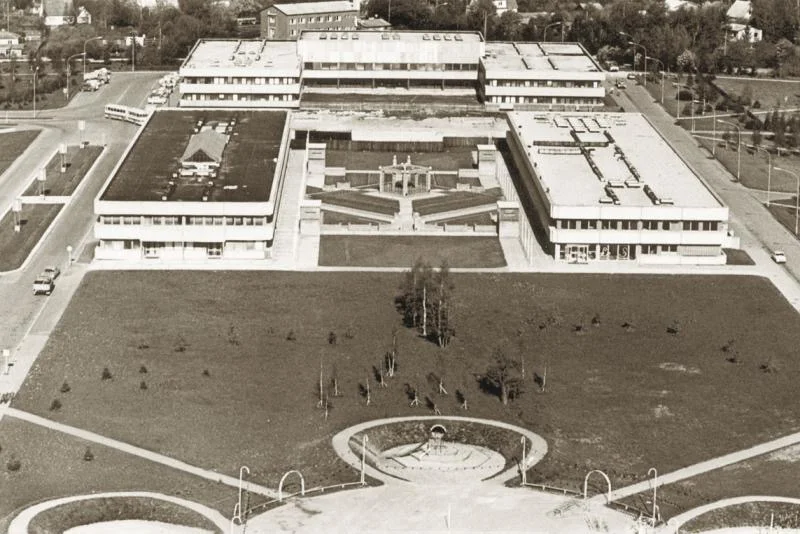
Kirov was not just a workplace. A complete living environment grew up around it – its own kindergartens, schools, shops, services, healthcare, and cultural and sports facilities.
That is why, in many people’s memories, Kirov is much more than a Soviet-era collective farm. It was a place where people worked, lived, raised children, met up and spent their time.
Even today, that time is often remembered fondly – not because of the system Kirov operated in, but because of the people, the opportunities, the shared activities and the sense of community that grew around it.
This is also shown by the fact that former Kirov employees and their families still get together today to reminisce. In 2024, so many former employees came to a reunion held to mark the 100th anniversary of Oskar Kuul’s birth that, according to the organisers, the hall was packed.
Art in the middle of a collective farm
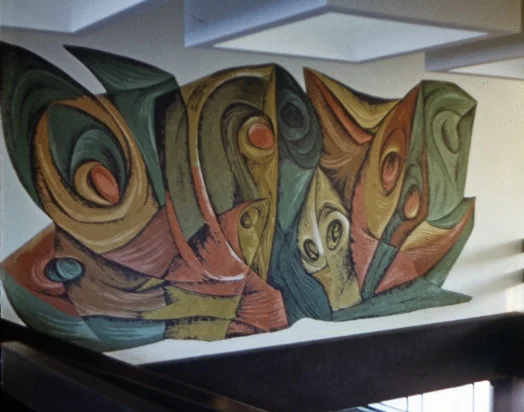
The story of the building at Kaluri tee 5 also includes one particularly fascinating detail. In the 1970s, Tõnis Soop created the mural „Fish“ here, made using the coloured sgraffito technique. The work remains in the building to this day and is part of its story.
Soop was not the only artist at Kirov. He was one of several artists who worked at this large enterprise. He later became a very important cultural figure for Viimsi – he designed the flag and coat of arms of Viimsi Parish and was the first director of the Viimsi Art School.